
Cross Country Risk Management for Busy Airspace

If you have ever flown a cross country near a major metro area, you know the feeling.
The weather is changing, frequencies are busy, airspace transitions pile up, and your head is doing ten jobs at once.
Cross country flights are where pilots build experience, but they are also where small planning mistakes can stack up into high workload.
As a flight instructor, I do not teach cross country planning as a paperwork exercise.
I teach it as risk management.
Because if you can manage risk on a busy cross country flight, you are building the mindset that keeps you safe for the rest of your flying life.
This article breaks down a simple, repeatable framework for cross country risk management, with special focus on busy airspace and real world GA operations

What “Cross Country Risk Management” Means
Risk management is not fear.
It is awareness and control.
Cross country risk management means:
identifying hazards before departure
assessing how those hazards interact
creating mitigations that protect safety margins
setting clear decision points
In busy airspace, risk tends to come from:
workload
distractions
airspace complexity
traffic density
weather pressure
time pressure
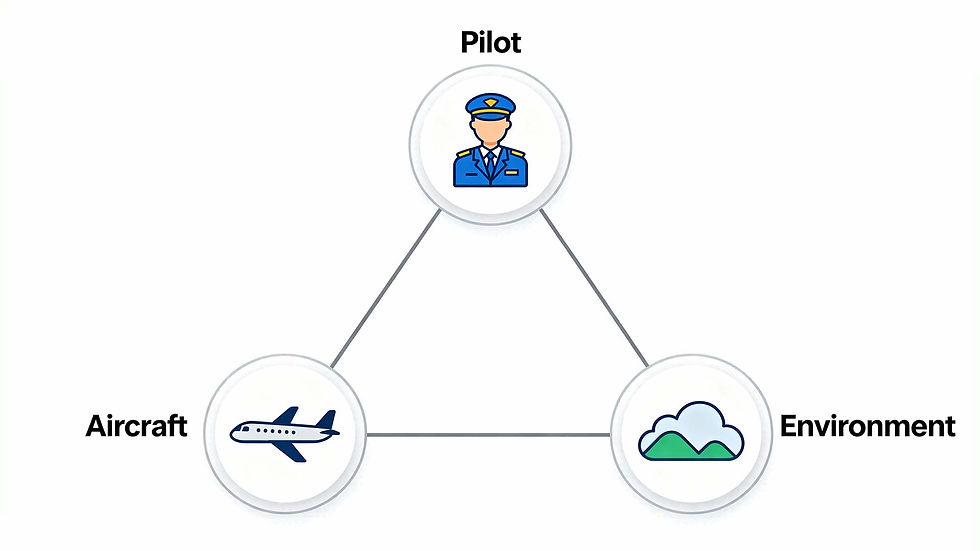
The Three Risk Layers Every Cross Country Has
Layer 1: Pilot
fatigue
proficiency
currency
stress
recent flying experience
Layer 2: Aircraft
maintenance status
performance margin
fuel planning
avionics reliability
limitations
Layer 3: Environment
weather
terrain
traffic
airspace
airports and alternates
NOTAMs and restrictions
Most bad outcomes happen when all three layers have small weaknesses at the same time.
Your job is to strengthen one layer when another is weak.

Busy Airspace Adds Unique Risk
In quiet airspace, a pilot can “figure it out” as they go.
In busy airspace, you have less time and less tolerance for indecision.
Here is what changes:
Frequency workload
You may be switching:
ATIS or AWOS
ground
tower
departure
approach
center
local advisories
Airspace transitions
You might cross:
multiple class B shelves
class C rings
MOAs
restricted areas
special flight rules areas
Traffic density and closure rates
Busy airspace means higher closure rates.
Your scan needs to be aggressive and your flight path predictable.
Decision windows are shorter
If weather drops or a runway changes, you may have minutes to adjust.
That is why planning matters.
A Practical Cross Country Risk Management Framework
Here is a simple framework pilots can actually use.
Step 1: Build a “big picture” plan
Ask:
what is the route?
what is the weather trend?
what are the airspace pinch points?
where are the best alternates?
what is the time pressure?
Step 2: Identify top five hazards
Limit it to five.
If you list twenty hazards, you will not manage any.
Examples:
marginal ceilings near destination
strong winds in a narrow corridor
class B transition with heavy traffic
fuel margins tight due to headwinds
pilot fatigue after a long workday
Step 3: Create mitigations
For each hazard, create a real mitigation.
Example: Hazard: marginal ceilings Mitigation:
set a higher personal minimum
plan an alternate with better weather
brief a diversion point
depart earlier
Hazard: busy class B transition Mitigation:
file flight following
pre-brief frequencies
prepare a “stay outside B” route
Step 4: Set decision points
Decision points prevent “press on” bias.
Example: “If ceilings drop below X at this waypoint, we divert.”
Step 5: Brief it like a crew
Even if you fly solo, brief yourself.
In busy airspace, mental rehearsal matters.
Weather Decision Making for Busy Cross Countries
Weather is still the top driver of GA accidents and incidents.
For busy airspace flights, focus on:
Trend, not snapshot
A single METAR is not enough.
Look at:
what it was doing
what it is doing
what it will do
Wind and turbulence planning
Busy airspace often means:
more controlled approach paths
less flexibility
stronger crosswinds near coastal airports
Convective planning
If storms are possible:
plan routes that allow outs
avoid narrow corridors with no alternates
brief escape options
Personal minimums are your safety valve
In busy airspace, the margin matters.
Higher personal minimums reduce workload and risk.
Fuel and Alternates: Where Pilots Get Trapped
Busy airspace can create fuel traps.
Example:
holding for sequencing
long vectors
delayed approach
unexpected runway change
H3: Risk management fuel mindset
Do not plan “legal fuel.” Plan “comfortable fuel.”
If you land with the legal minimum but stressed and rushed, you planned wrong.
H3: Alternate strategy
Pick alternates that:
have multiple runways
have services you may need
have better weather patterns
are outside the busiest constraints
Pilot Insight (Instructor Notes From the Real World)
Here is the pattern I see.
The pilots who struggle on busy cross countries do not lack skill.
They lack bandwidth.
They have not pre-briefed:
frequencies
airspace entry plans
contingency routes
diversion airports
So the flight becomes reactive.
The pilots who do well are proactive. They are not perfect. But they have prepared enough that surprises feel manageable.
One practical trick: Write your “top three next actions” on your kneeboard.
Example:
If weather drops, divert to X
If denied class B, route around via Y
If fuel margin shrinks, stop at Z
This reduces decision pressure when workload spikes.
Action Checklist (Cross Country Risk Management Guide)
Busy Airspace Cross Country Checklist
Pilot
rested and hydrated
currency checked
personal minimums set
Aircraft
fuel planning with margin
performance calculated for expected winds and runways
avionics checked
alternate plan if a system fails
Route and airspace
identify class B and class C transitions
pre-load frequencies
brief a “no clearance” route
request flight following early if possible
Weather
review trend and forecast
identify ceilings and visibility risk
brief convective avoidance
set diversion decision points
Alternates
select at least two alternates
brief approach and runway options
consider traffic and services
Mental rehearsal
brief taxi, departure, airspace transitions
visualize high workload moments
identify “pause points” to slow down
FAQ (SEO Style Questions)
1) What is cross country risk management?
It is the process of identifying hazards, assessing risk, and building mitigations and decision points for a cross country flight.
2) Why is busy airspace more risky for cross country flights?
Because workload increases, decision windows shrink, and traffic and airspace complexity reduce flexibility.
3) What are the top hazards on busy cross country flights?
Weather trend changes, airspace transitions, traffic density, fuel margin issues, and pilot workload and fatigue.
4) What is the best ADM checklist for cross country flying?
A practical ADM checklist covers pilot, aircraft, environment, route, weather, alternates, and decision points.
5) How do I manage airspace transitions safely?
Pre-brief frequencies, know the airspace structure, have a route around, request flight following, and keep the airplane predictable.
6) How much fuel margin should I plan in busy airspace?
Plan comfortable fuel, not just legal fuel, because sequencing and vectors can add unexpected time.
7) What is the biggest cross country planning mistake pilots make?
Failing to build real decision points, then pressing on when conditions degrade.
Conclusion and Community CTA
Cross country risk management is not about being cautious.
It is about being professional.
Busy airspace flying is where pilots learn how to manage workload and make solid decisions. The better your planning, the more mental bandwidth you have when something changes.
If you fly cross countries in busy airspace, share with the IFPA community:
your top risk management habit
your favorite planning tool
one lesson you learned from a busy cross country flight
That conversation helps everyone fly safer.


